

Non surgical facial treatments

Look great without the expense and risk of surgery
middle-aged woman with wrinkles
In the present economic environment not many people are willing to spend large sums of money for elective services such as cosmetic surgery. On the other hand, concerns about aging remain. So what can be done to improve one's appearance short of actual surgery? Choices fall into three categories: topical treatments, botox and injectable fillers, all of which allow you to mantain appearance without the expense and downtime of cosmetic surgery.

Topical Treatments

The Obagi System
The color and texture of facial skin reveals signs of aging. If you look carefully in the mirror you will probably see variations in pigmentation, particularly in the cheeks, forehead and around the mouth, and your skin may have a rough appearance with large pores and a dull finish.The Obagi regimen will remove the outer keratin layer of skin (the layer of dead cells which has not yet fallen off), and will also blend the pigment in your skin, giving you a more uniform color rather than blotchy multiple colors. The overall effect is a smoother, brighter, younger appearance.
The treatment is a series of six creams combined with prescription-strength Retin A which you apply twice per day. Initially your skin will peel, much like a chemical peel, removing the outer layer and leaving the skin slightly reddened. After a week or two the peeling will stop. Once the improvement has reached its maximum, you would stop the aggressive treatment and switch to a maintenance program. Before and after photos will show a dramatic change. The product comes as a kit with all six ingredients, and one kit lasts approximately two months.

Because it contains prescription ingredients, the Obagi regimen is only available from a physician.
Teamine
Discoloration of the lower eye lids or "dark circles under the eyes" is a very common complaint. Although this is more common in older people, it can occur as a hereditary factor in young people, males and females. Teamine cream will significantly reduce the dark circles from the lower eye lids after four to six weeks of daily use.
Nectifirm
Sagging skin and wrinkling of the neck are one of the earliest signs of aging. Nectifirm, a topical cream, can improve this situation. If you have significant sagging skin Nectifirm will not correct your problem, but if you are in the early stages of loose skin and creases on your neck, then Nectifirm may improve your appearance and help postpone the need for a surgical neck lift.
Latisse
Several years ago people using a certain medication to treat glaucoma (an eye disease) noticed that their eye lashes were growing. Research proved that the active ingredient of the glaucoma medication did indeed cause the eye lashes to increase in length, and now that medication has been released in a formula specifically for growing longer eyelashes.
Latisse is a topical liquid that is applied to the upper eye lid just above the eye lashes once daily. In one to two months the lashes begin to grow significantly. After several months most users decrease their treatments to every other or every third day just to maintain the new lash length. If you stop using it the lashes will go back to their original length.

Botox

Botox has been around for years and is widely used by men and women to reduce the signs of facial aging. The most common areas for Botox treatment are the vertical lines between the eye brows, the lines of the forehead and the laugh lines on the outside of the eyes. Botox can also be used to raise the eye brows, raise the corners of the mouth and decrease the lines of the upper lip.
Botox is usually priced by the number of units used, and it takes 20 units to correct the lines between the eyebrows.A treatment with Botox will usually last about three months, and should be administered by or under the direction of a physician.
Note: there is a new product on the market called Dysport which seems to be very similar to Botox both in cost and effect; however, it has not been studied as long as Botox.

Injectable fillers

Injectable fillers have been available for many years, but when hyaluronic acid fillers were introduced a few years ago, the procedure was revolutionized. This gave us a very stable, pliable filler with no possibility of an allergic reaction, easy to administer and with minimal complications. It has been used primarily to reduce the wrinkles of the face, especially the upper lip, the folds next to the nose, the lower lip and chin. By reducing wrinkles and folds and adding fullness to the face, the fillers are a wonderful tool to reduce the effects of facial aging without surgery.
Most treatments can be accomplished using one cc of filler although sometimes a second cc may be necessary. The most I have ever used at one sitting is 4ccs. The average cost of the hyaluronic fillers is $500 per cc.

Example prices

As a guide, the author's own practice offers the above treatments at these prices:
  • Obagi kit with the Retin A - $284
  • Teamine - $65 per jar, which should last approximately, 30 to 45 days (including a money-back guarantee)
  • Nectifirm - $65 for a jar which should last about two months (including a money-back guarantee)
  • Latisse - $130 for one box or $200 for two boxes. One box will last about two months
  • Botox - $260 for 20 units (sufficient to correct the lines between the eyebrows)
Read More

What to do about hair loss

 Hair today, gone tomorrow?


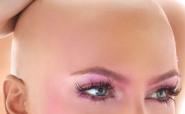
beautiful bald woman
Hair loss is becoming as much of a problem for women as it is for men. Some of it is normal; like grass, hair grows in cycles, but not all of it grows at the same rate. About 10% of a person's hair is either growing or resting at any given time. During resting cycles, hair growth may be minimal.
Also like grass, certain things can interfere with hair growth, the most common being the natural aging process. That's why women watch their hair fail to grow or start thinning. Sometimes it will even produce thicker spots in some places and nothing at all in others.
Other factors that can affect hair growth include exposure to chemicals, illness, improper diet and infections. Certain medications, like birth control pills, can contribute to hair loss.

 Most people typically lose between 50 and 150 strands of hair a day, even more on days when the hair is washed. Some people panic when they see any hair in the drain, on their pillow or in their comb or brush, but unless the amount is excessive, there may be no problem at all.
Hair loss in women is spotted differently than in men. While some women may notice a receding hairline, they will more likely notice a growing gap in the width of parting of their natural hair. Depending upon the reason behind the extra hair loss, there may or may not be an easy solution.
Usually, when a woman reports excessive hair loss to her doctor, they will want to run some tests to make certain there is an existing underlying problem like hypothyroidism or an auto-immune deficiency. Physicians will also look for other problems like alopecia, psoriasis or seborrheic dermatitis.
In a normal situation any hair that is lost is replaced by hair of the same size. However, if female pattern baldness is an issue, old hair may be replaced by something much finer. That is an indication that hair follicles may be shrinking. If that's the case, they may eventually stop growing hair altogether.
Excessive stress, quick and heavy weight loss, normal hormone changes, other medical problems, surgery and vitamin under- or overuse can also lead to hair loss. Using too many chemicals on the hair, like those found in hair dyes, permanents and straighteners, can also be the culprits. Overuse of certain types of styling tools like hair dryers, hot rollers, curling irons or straight irons can damage the hair, causing it to break away from the scalp. Even something as simple as too much washing, rubbing of the hair, or pulling it tight for styling can cause damage, particularly when the hair is wet.
Unfortunately, in some instances hair loss can be permanent with or without treatment. While many medical conditions that lead to hair loss can be treated, there's no guarantee of a return to normal hair growth patterns. Women who experience cancer, for example, may find their hair grows back thicker than before chemotherapy and radiation. Others, on the other hand, find it doesn't grow back at all or that it is sporadic in nature.
In cases where chemical or product causes hair fall out, or when drugs cause the problem, hair may grow back once use of those items is stopped. However, that isn't always the case, and hair may very well grow back differently than it did previously. It depends upon how much damage was actually done to the hair follicle itself. The same can be said for use styling tools and hair styling products.
If stress or quick and heavy weight loss is the cause, a change in diet maybe called for to ensure new hair growth. Diets need to be rich in proteins, fruits, vegetables and whole grains and need to contain fewer food items that are fatty or sugary in nature. Chicken, eggs and fish are high in proteins that are good for the hair. Liver, nuts and soybeans contain much-needed biotin, which helps to thicken the hair shaft. Beef and certain types of seafood like clams, crabs, oysters and salmon are rich in vitamin B5, which is essential for new hair growth, as is the folic acid in brown rice, grains and leaf vegetables.
Vitamin supplements may also help many women grow new hair if the follicle isn't damaged. One of the best on the market for that purpose is Healthy Hair, Skin and Nails by Andrew Lessman. The product is sold on Home Shopping Network (HSN) for as low as $12.99 for one month's supply.
Hair growth products like Rogaine and Minoxidil will work for some women. Unfortunately, the treatments can be expensive since they must be continued for an extended period of time in order to ensure continued hair growth. Rogaine retails for between $30 and $50 for a 30-day supply. Minoxidil is a bit cheaper at between $20 and $30 per month.
A surgical technique called "scalp reduction" can be used in some cases where pattern baldness is small. The procedure literally pulls the balding scalp tighter and closer to the areas that have hair. That helps to give off a more uniform appearance. The cost, however, is steep, running anywhere from around $2,000 to $6,000.
Hair transplants are even more expensive. They range in price from $3,000 to about $12,000. They don't always "take" or may require supplemental transplants in the future.
When hair loss can't be cured, it becomes necessary to look for other methods of dealing with the problem. Some women can afford hair transplants while others are forced to resort to hiding. Many women resort to wigs, hairpieces, extensions, weaves, hats, turbans or bandanas for that purpose. All are feasible, but some are less expensive than others and some work in certain situations but not others.
Wigs provide all-encompassing concealment. It allows a woman to choose the hair color she wants or to experiment with more than one. She can also opt for varying styles and lengths. With today's lighter weight, cooler wigs, most women can find something to suit their needs. Of course, synthetic options are considerably cheaper than human hair wigs. The former can run as low as $29.99 while the latter can cost hundreds of dollars, especially if they're custom made.
Hairpieces can supplement hair loss that occurs in only certain areas like the hair crown or at the sides. Extensions lengthen the hair, as can weaves. Hairpieces and extensions come in both synthetic and human hair. Most weaves are done only with human hair, although some synthetic options are also available. Costs will vary depending upon the hair and style choice and where the work is done; clip-in extensions and hairpieces can be purchased online or through beauty supply stores and is done by the individual right at home. Weaves require professional assistance and can be very expensive; usually beginning at $65 and going up from there.
Hats, turbans, and bandanas are relatively inexpensive and can be found almost anywhere. Unfortunately, not all women look good in them or feel comfortable wearing them.
Some scientists believe that hair loss will continue to grow as a national problem, primarily due to all the outside influences that hair is exposed to. If so, more and more women will face hair loss problems and be looking for solutions to maintain their natural beauty.
Read More

Makeup for mature women

Products and principles to make older skin look great

older woman smiling
When it comes to cosmetics, not all manufacturers take mature women into consideration in building their product lines. Most products are aimed at the youth market, women between the ages of 18 and 40, and many of these products do nothing for the appearance of older women’s skin, or can even cause further damage.
Cakes and heavy creams, for example, settle into fine lines and wrinkles, making a woman look years older. Powders and shimmers accent wrinkles, highlighting them instead of making them disappear. Some foundations include ingredients that are too harsh for aging skin.
The good news is that there are cosmetic lines that are suitable for the older generation. They add skincare ingredients to their products that help plump the skin; provide SPF protection against the sun; even out the blotchiness that often comes with age; infuse moisture deep into the skin to return what nature removes. They even reflect light, to ensure a more youthful glow. So, which makeup lines work best for mature women? There are more than a few good products to choose from. Below are listed some of the best I’ve found so far:

Bare Minerals

Bare Minerals products, from Bare Escentuals, don’t contain a lot of chemicals or preservatives, and so they retain a purity that most cosmetics do not. Additionally, the micro-fine minerals glide over the skin without settling deep into pores, fine lines or wrinkles. They don’t add color - they just perfect what Mother Nature already provided by removing redness, splotches and blemishes, evening out skin tone without changing it.
With Bare Minerals, a woman controls how much or how little foundation she applies. Put on dry, the minerals allow the natural skin to show through. Applied wet, they provide more coverage without covering a woman’s natural beauty.
While Bare Minerals aren’t cheap, they do last a long time. One .28 oz. pot retails for around $26 but will easily last several months.
Bare Minerals come in a wide range of shades fair for porcelain skin to deep warm for very dark skin; all in all, there are 20 shades to choose from.

L’Oreal Visible Lift Smooth Absolute Instant Age Reversing Foundation

The name is a mouthful, but the product works. Some claim as many as 10 years disappear as a result of using this anti-aging foundation. The product’s hydra-collagen complex “reduces the look of aging while adding moisture and plumpness to the skin”. The end result is smooth, flawless skin that looks and feels younger.
The foundation glides on evenly and lightly, smoothing out and filling in pores, lines and wrinkles. It provides seamless, perfect coverage without leaving streaks or splotches behind. More than 90% of the women using this makeup agree they experienced instant smooth skin.
Visible Lift comes in eight shades suitable for most Caucasian and olive-skin tones. They vary from classic ivory to sun beige. The cost for 1 oz. is around $15.

Maybelline Instant Age Rewind

This makeup provides an innovative formula with an inventive application system. The makeup contains Goji berry and collagen to improve the skin’s elasticity while also tightening it for a more youthful appearance. It also provides SPF protection from the sun’s rays. Delivered in a clever application system, the foundation corrects small flaws as it covers blemishes and splotches by evening out skin tone. The dispenser also contains anti-microbial protection to prevent transfer germs from the makeup to the skin and vice versa. Continued use also reduces blotchiness while evening out skin tone.
Instant Age Rewind comes in 12 shades that range from ivory to dark tan. The cost is phenomenal at between $7.99 and $12.99 per 1 oz. bottle.

Peter Thomas Un-wrinkle Foundation

This foundation is made especially for aging skin. It offers long-wearing coverage, with sun protection and skincare ingredients built into the makeup. Un-wrinkle contains collagen boosting ingredients that help repair damaged skin and give it an overall youthful appearance, and does not contain harsh ingredients like dyes, fragrances, preservatives or sulfates. It also offers light diffusers that draw the eye in where it belongs and away from blemishes and flaws. Finally, it reduces the amount of oil put into the skin to keep it looking fresh and young.
The down side is that Un-wrinkle only comes in four shades – light, medium, tan and deep. The good news is that these shades blend in well with natural skin tone to provide coverage without adding excess color. The cost varies from place to place. It can be ordered by catalog at as low as $30 or purchased in cosmetic boutiques for around $45 for 1 fl. oz.

Smashbox High Definition Healthy FX Foundation

This Smashbox product is perfect for aging skin because it provides all the right skincare ingredients to make any complexion look like sheer perfection. A time-released moisturizer within the makeup makes certain that skin stays dewy soft from morning until night. Skin firming ingredients make skin appear tight and youthful. Nutrients feed the skin while Vitamin C helps fight free-radicals. Ribose regenerates damaged skin cells and helps create new ones. UVA and UVB protection keeps the sun’s damaging rays at bay. Finally, FX Foundation does away with extra oils that can make aging skin look greasy and unattractive.
This makeup comes in an easy to use pump container that allows a woman to use as much or as little as she wants, while keeping cross-contaminants from entering. It comes in 13 shades, which provides one for just about any skin color. They range from the fairest of fair to the deepest dark.
The cost is moderate at $38 per 1 oz. pump.

Do's and Don'ts for mature skin

There are some obvious do’s and don’ts when it comes to picking out makeup for mature skin.
  1. Use a makeup primer. Mature skin tends to be blotchy and uneven. That’s always a dead giveaway of age. However, today’s makeup primers help to even out the skin, providing a perfect canvas for makeup application.
  2. Go for coverage but don’t create a mask. A lot of full-coverage makeups today can cover imperfections without creating an unnatural-looking mask. Foundation that is too heavy will make skin look much older than it really is. Instead, look for foundations that cover flaws but still allow the natural skin color to show through.
  3. Dump the powder, as powder always settles into fine lines and wrinkles. Women who really insist on using powder should switch to a dry, mineral-based makeup instead. However, be sure the mineral makeup doesn’t contain too much mica, which can reflect light poorly and make skin look older instead of young.
  4. Let go of glimmers and shimmers. Glimmers, shimmers and many bronzers can actually add years to a woman’s skin. Instead look for soft, light-reflecting products.
  5. Choose light-reflecting makeup carefully. A mature woman should never go completely flat with cosmetics. She should look for products that reflect light away from her blemishes and flaws. But finding the right product can be tricky, so look for something with a natural, dewy softness, the kind younger skin exudes naturally.
  6. Moisturize, moisturize, moisturize. From primer to foundation to eye shadow and lip gloss, each product should offer extra moisture to make skin look younger.
  7. Use blush stains, tints or creams. Powder and cake blushes are not meant for older skin.
  8. Highlight the brow bone. That will open up the eyes and make them appear larger. Nude peach or pink highlighter works well. Also use highlighter inside the lower lid to add sparkle to the eyes.
  9. Accent lips with liner. Aging lips thin out and look dried out. Lip liner helps them stand out. Also add lip gloss to make lips appear poutier.
  10. Don’t overuse mascara. Mature women shouldn’t add mascara to their lower lashes. That’s a trick for the young alone.
Read More

Can Plastic Surgery Make You More Likeable? A Close Look at a New Study

Photo: Getty Images
Photo: Getty Images
TIME-logo.jpg
Putting aside reconstructive surgery, facial plastic surgery is all about vanity. Which, let’s face it, means looking younger and more symmetrical. But erasing those signs of experience and maturity also changes the way other people see you. Like it or not, and socially acceptable or not, we make snap judgments about people based on purely superficial traits all the time. Furrowed brow? You might be interpreted as mean or anti-social. Heavy, hooded eyes? Clearly untrustworthy. While it seems ridiculous now, at one time in our evolutionary history, being able to make such determinations might have been life-saving: Who’s out to do us harm? Who is there to help?

In modern times, the sad truth is we still make snap judgments about certain facial features and the way we read some faces—as aggressive or unlikeable, say—tends to be connected with saggy skin, heavy chins and more crepe-like skin. That’s what plastic surgeon Dr. Michael Reilly from Georgetown University and his colleagues found in a report published in JAMA Facial Plastic Surgery.
In his study, he asked people to rate either before or after photos of women who had had cosmetic procedures. Not only did he ask them to evaluate how attractive and how feminine she was, he also had people make guesses about her personality based on the photos. Why the personality traits? Previous studies have shown that physical features have a strong correlation to certain personality types, and Reilly says he wanted to understand exactly how the changes he made as a plastic surgeon were affecting his patients. “If I’m embarking on this career, and if I’m doing this type of surgery, I want to know what I’m doing to patients,” he says. Laudable, certainly, but what are the raters’ responses really telling us? The raters never saw the before and after pictures of the same person, which Reilly says he did in order to reduce any potential bias.
Reilly found that people consistently rated the post-op photos as higher on things like social skills, likeability, femininity and overall attractiveness. Not a surprise, given that cosmetic procedures are supposed to improve attractiveness. But likeability? Social skills? Not to mention trustworthiness and risk-seeking?

For one, asking people to rate faces on these characteristics is a bit artificial to begin with. The personality traits people were asked to assess have biased terms—like “aggressiveness,” says Dr. Sam Lam, a facial plastic surgeon practicing in Dallas, who wrote an editorial accompanying the study. Raters might be saying that faces have certain traits only because they’re forced to make a choice when they might not if they weren’t in a study setting.
The results also reinforce the fact that — surprise!— our society has a bias against aging. Since the post-op, and presumably younger-looking, images of the same women seemed to score higher on things like social skills and likeability than their pre-op pictures, that strongly suggests that aging-related features are associated with less-than-desirable personality traits like anti-social behavior. “Aging reverses positive dynamic expressions like smiling,” says Reilly, noting that when we smile, we bring our cheeks up and tighten certain facial muscles. “When we age, our faces look like the opposite of a smile.”

Yet couldn’t aging also be seen in exactly the opposite light, as a factor that makes someone more adept and experienced at social interactions and therefore more likeable than a younger person who is more awkward and uncomfortable navigating among strangers?
A previous study from 2013 of before and after plastic surgery ratings didn’t find the same improvement in attractiveness that the current one did. In that study, people looking at photos of patients pre- and post-op didn’t think the procedures made patients any more attractive, and only seemed to make them look about three years younger.
Which only goes to show that we still have a long way to go before we can figure out exactly what we’re doing to ourselves when we go under the knife for cosmetic procedures. We’re changing our outward appearance, yes, but how that affects our inner selves and how others perceive us isn’t — and likely won’t ever — be entirely clear.
courtesy: Time.com.

Read More

5 Moves to Bust Belly Fat


Photo: Getty Images
Photo: Getty Images
Singer Kelly Rowland looks as though a day hasn’t passed since Destiny’s Child ruled the airwaves.
Okay, so maybe her sense of style has changed a bit, but you would never guess that the 34-year-old, first-time mother gave birth to her son Titan just five months ago.
Good news for us: She shared her snap-back-into-shape secrets in a recent interview with Extra. Rowland credits SoulCycle, her trainer Jeanette Jenkins, and eating according to the 80/20 rule, which means chowing down on clean foods 80% of the time, and allowing indulgences during the other 20%—all of which helped her shed a whopping 70 (!) pounds after giving birth.

“SoulCycle is the secret, [SoulCycle instructor] Angela Davis…when I go in there and it’s the wee hours of the morning she is a great secret, so motivational,” Rowland told Extra.
She also praised Jenkins, who she worked with on the Sexy Abs with Kelly Rowland DVD ($20, amazon.com), for helping her push harder. “Jeanette comes in with so much energy and this huge smile on her face and you can’t help but to get excited about working out,” Rowland said.
Clearly Rowland loves her workouts, making her just the motivation we need. Here are a few tummy-toning moves from her favorite trainer, Jeanette Jenkins herself, to help you get it right, get it tight.

Plank/Pelvis Tuck

Works: Rectus abdominus (six-pack) and transverse abdominus (waist-cinching corset muscles)
How to do it: Lie facedown with legs extended, elbows bent, feet hip-width apart, elbows shoulder-width apart. Contract abs, then tuck toes to lift body, elbows directly under shoulders (A). Hold for 4 breaths. Bend knees (do not touch ground), tilt pelvis up; hold for 4 breaths (B). Keeping abs tight, straighten legs, hold for 4 breaths. Repeat 3 times.
Photo: David Heisler

Side Crunch & Pulse

Works: Obliques (sides of abs), seratus anterior (muscles below chest), and six-pack
How to do it: Lie faceup, knees bent to 90 degrees, hands behind head. Lower knees to left and crunch up (A); do 15-25 reps. Return to start, lift shoulders, extend left arm, and pulse forward (B) for 15-25 reps. Repeat sequence on right side. This is 1 set. Do 2 sets.
Photo: David Heisler

Tone-It V Hold

Works: Fast-twitch muscle fibers (the ones that contract during high-intensity moves and help improve muscle tone)
How to do it: Sit with knees bent and feet on floor. Clasp underside of thighs with both hands, hinge back, and lift feet until lower legs are parallel to floor; release hands (A). Straighten legs and reach for your toes (B); hold for 8 breaths. Repeat 3 times.
Photo: David Heisler

Navel-To-Spine Pulse

Works: Six-pack
How to do it: Lie faceup with knees bent and feet on floor. Lift shoulders and clasp underside of thighs with both hands; contrast abs (A). Tilt pelvis up; let go of thighs, and reach forward (B); pulse 20 times. Return to start; reach hands to outside of right thigh and do move with torso turned to right; pulse 20 times. Repeat on left side. This is 1 set. Do 2 sets.
Photo: David Heisler

Low-Belly Leg Reach

Works: Corset muscles and six-pack
How to do it: Lie faceup with knees bent to 90 degrees, hands behind head, and abs contracted. Keeping knees stacked over hips, lift shoulders and crunch up (A); inhale and hold for 3-5 seconds while squeezing lower belly (B). Do 2 sets of 10-15 reps.
Photo: David Heisler
Courtesy:Priscilla Ward
Read More